Monday, 1 February 2021

Over 1 month on the 770g

After being on the Medtronic 770g with guardian 3 sensor for over a month I thought it about time I take a look at what it has been like. To start with it is a little bit frustrating that the app that links to the 770g doesn't currently work on my phone however with it in the roadmap to be add and also having an older phone around I managed to check everything out.

To start with I have previously been on the 670g for 2 years prior to now and I mention this because it has a defined outcome with my 770g. Going from having total control prior to the 670 to allowing the pump to get to know you was a step that took time and awareness. It meant empty carb boluses would now have longer effects than just brining your numbers down. It meant making small adjustments to the basal rates could now be done for you and possibly even better than you. It meant trust was now even more important. What it didn't mean was that it was easy to release the reigns and we would always do what was needed. I made the mistakes of trying to change things or make things happen faster than they should. I was guilty of not putting all my faith in what I was to have on my hip.

However through practice and stumbles you learn to work together and to put trust into multiple lines of code that will get to know you and how your diabetes work. Putting on my new 770g would now allow me to put all the wrongs right and start fresh. I started not trying to quicken the drop of my BS, I wouldn't do empty boluses, I would watch wait and see how it performs. 

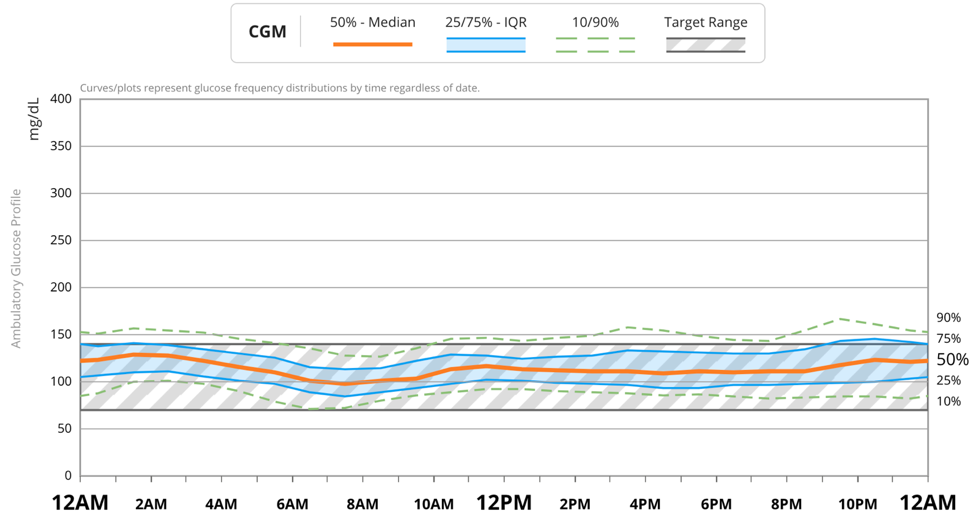
Every now and again on the 670 I would switch back to manual to either move away from my frustration but also say I was wanting to make sure my basal rates were still correct. I would have highs and lows because things were just not right and I had to reactivate my brain to adjust the finer details of everything I was doing. What I now realise when I try to do this is that the auto mode was in fact doing more than I thought and in fact a lot more. The clean data that I had now begun with on the 770 was allowing the pump to keep me in range between 85 and 95% of the time (depending on the day, average over the last 30 days is 92%) keep in mind also that when out of range we are talking high 3's and maybe up to 11 mmol. Yes I still need to manage small adjustments to carb ratios, active insulin time and of course carb counting but in the scheme of things I realise that this is now a lot easier. Trust has now been formed and I look forward to feeling great without some of the worry.

The one thing that has to be stressed is that this whole process takes time and determination. It is easy to do a bolus and not eat, it is easy to turn off auto mode, it is easy to just stay as is and not accept change but what isn't easy is replicating the feeling of less worry and more time in range.

Early on in the 770 and the 670 journey I was very frustrated with sitting higher, especially over night where I was used to waking up in the high 4's low 5's however I was now in the 8's and even up to 10's. This i didn't like it just didn't feel nice within my body. I persisted though and now have the night sitting between 6.5 and 7.5. After a very busy day last week end I was even in the 5's (a few more alarms with minimal delivery but you deal with that).

So now the technical side of the 770 compared to the 670..... yes the Bluetooth connection. As I mentioned before my phone isn't yet capable of running the app (to new) however I have been doing some small tests on some other phones I have access to. Historically and even now I don't necessarily want to be looking at my pump all through out the day as my trust is there that with the data I enter It will keep me within range. I do understand when there is a child with T1D (as my daughter has) it allows for visibility while not stopping them or while they are away from you. Keep in mind though for the last part your child will need to have their own phone that is pushing the data out while you connect as a carer. It is just that visibility. The major benefit that I envisage is that when your child is sleeping (obviously in a separate room to you) their phone is capable of sitting on the bedside and you will get notifications if something needs attention. This wouldn't then interfere with them carrying another device at school or kinder or even child care but would give the peace of mind that you have the information. The ability to now be able to upgrade the software and to automatically upload to carelink is also another great feature through the app. It means greater amount of uploads so that your care team can see and offer help with the information.

I will continue to look at this partnership of person to pump (P squared lol) but for now knowing that my pump has the ability to stop my dangerous lows and high highs is amazing but to be able to get to know me and what my body needs is miraculous. Step by step, closer and closer we get.

Tuesday, 13 October 2020

Medtronic 670g with Guardian 3 sensor

 I watch across the diabetes social media landscape and constantly see people questioning everything, especially the pump technology. These days it's not just the pump but the sensors and also how the 2 intersect with each other. The information out there is spread thick for and against, pros and cons and just plain right wrong and to decider all of it can be daunting. With this all in mind I thought I would write a simple things I like about the technology I chose from the get go and continue to be the best self I can be with it. 

  *********The MEDTRONIC 670 with guardian 3 sensor.**********

* Developed by a multinational company that is actively heading the market in technology advances. Why does this matter? Because as with all technology things can go wrong and things can break but unlike your phone this is playing with health and lives. Knowing a company is in it for the long haul and prepared to jump through the hoops to make our lives simpler is even more reason to sleep at night. For me this brings me comfort day in, day out. 

To be able to bring a medical device to market there are a rigorous testing protocol that has to be adhered to. Medtronic have a road plan and not just looking at the next step. Forever looking to get each small step right before the end goal of an artificial pancreas. Yes it would be great to have all the bells and whistles straight away however I would also like the knowledge that the technology that comes to us is going to work and work for the long term.

* The screens and buttons are user friendly. Yes you need to know lingo but that comes with training and time. Colour screen makes it easy to determine when things are getting low and easy to understand the different parts of the BG graph. All in all the difference between the monotone pumps of yesteryear and this it really is pleasing to the eye.

* When using the linked contour next BG meter it automatically gets sent and stored onto the pump. I remember the years of writing down your readings in a book and through the teenage years the making up of results (I can't say we all did it, but we all did it lol).

* Being attached 24x7 gets forgotten very quickly when the benefits are realised. I have been pumping for 14 years and I have not even been tempted to go back to MDI.

* The automation (Smartguard).... now this is interesting and I am going to be completely open and honest. The move to the 640g with the suspend before low was amazing. Having it lessen the curve without any interaction was clearly a life saver. Getting used to not treating simple lows took a while but once trust is built it allowed for an even bigger change in life. With it in place I would go to loose 40kg through not having to treat lows and by slowly adjusting my basal rate as my body changed. Each day was watching and adjusting. I say this because the next step was a big jump rather than a step however I would make the jump any day of the week. As I was used to making small adjustments myself the trust it takes to allow your artificial intelligence little friend to make on your behalf is difficult no matter how needed it is. I went through the training and remember being told to allow it to do its thing and to keep the data going into it as clean as possible. Of course because I was so in control before and I was relinquishing some of that the trust wasn't there so I found myself at times becoming frustrated and add in a fake bolus to try and bring my bg down. I would adjust the only things I could being the carb ratio, active insulin time and the sensitivity. In the back of my mind I knew my numbers were becoming dirty however I just wanted my numbers right. This being said the only difference was that the numbers were between 6-9 rather than 4-7. Now this went on until a day when I decided to have a spa and all of a sudden I received the dreaded critical pump error. I quickly checked over the pump and realized that there was a crack along the  back of the pump and the waterproof feature of the pump was compromised. As this realization set in I was on the call to the Medtronic help line and was quickly reassured that a replacement pump would be on its way ASAP.  I mention all of this for the simple reason of what is to happen next. Having the fresh pump that had no information on me I decided to make sure that the information was clean (as told initially). OMG now that my trust was in place my world was different again. The 670g was good prior however now it was great. My numbers were in place and the automatic adjustments brought me back to where I need. I bring this story up because it really does show that the sooner you can trust your pump and the information you can put in can be as clean as possible the best outcome you will get. My life change from having to make all the small adjustments along the way and spending the time watching and waiting for when I need to make the changes.

* Accuracy of the sensors seem to be a big sticking point with everyone. From someone that has been on every generation of sensors, I think my first was back in 2005, the generation 3 sensor is as close as they get. Please keep in mind though that you are inserting a small fine fiber into your body and within your body there are multiple variants that can occur. The sensors can now last up to 7 days and where the interstitial fluid reading has changed from around 15 mins behind the blood glucose level to now only being around 5 mins. Yes you can insert it into a place that isn't optimal, such as hitting a vein or blood pocket which saturates the site. In this case I apply pressure with a tissue for 5 mins as you would for any bleeding wound. I would also use the tissue to try and soak up any surface blood. Once I have done this I have been able to save probably 75% of sensors that have been saturated. In the instance where you hit a nerve this comes down to the individual and the ability to push through the slight pain. Me being head strong and not wanting to waste anything even if it is painful I will push through to get the most out of the sensor.

* As I mentioned earlier this is still a step in the longer process you still need to make necessary adjustments to the carb ratios and to be able to correctly identify and input the carbs for what you eat however the time it relieves another piece of your mind to concentrate on every day life.

I highly recommend the the 670g and guardian 3 sensor. I do also highly recommend to pay attention and work alongside your pump to ensure your data is clean and that you allow the algorithm to get to know the real you and your patterns. I also suggest jumping back to manual mode every now and again to make sure your manual rates are still correct. It is better to be safe than sorry in all circumstances.

Sunday, 9 June 2019

Medtronic 670g v2 Australian review

It has been a while since I have written or posted about t1 or my life however I have been taking my time to really understand the latest version of the Medtronic 670g with the guardian sensors (g3). It has taken a while because I wanted to see it from multiple angles and to make sure I had it right. So with out delay here is my verdict for the first hybrid loop system that has been approved by the FDA here in Australia.

I have been pumping now for 14 and a half years and when I first heard about pumps that were going to do some of the thinking for you I was 100% for it and hopped beyond belief that it would work and work well in my lifetime. I began and honed my skills on the veo... learning how to make the micro adjustments to ensure my control was as good as I could get it.. I then was introduced to the 640g and in a very quick period of time understood the importance of the suspend before low function and to trust that it would stop the dangerous lows from happening without treating like I was used too... I proceeded to have the 640g on my side as I lost a third of my body weight and honestly it was the reason why I was confident in doing so...

So now we come to the biggest change so far.. the release of the 670g hybrid loop system and the new sensor. The pump was to remove the need for basal and to remove the need for the micro changes and the sensor was to be the closest and most accurate thus far... a lot to believe and take in I know but accepting change is a great ability we humans have.
The time came and I attended the educators office to get my new best friend hooked up. We were told that it would be different and it would take time for the device to get to know you and how your body requires it's insulin intake. We were told that the information you put in would help it make decisions and keep you in range... notice I didn't say keep you at a key number.... no longer should we be thinking that a perfect number is 5.5 but to think the range we need to maintain is between 4 and 10 and honestly if I think back to when I was diagnosed that range is one that I have been working with since then however thinking that 5.5 was the best number to get... I see 5.5 for split seconds on the way up or the way down so isn't it a false sense of security to think that a single number is what we aim for.
Anyway back to where I was...

I had read on the online socials about how people were having a lot of trouble keeping it in auto mode and it was frustrating... we heard that because of it now focusing on a range rather than an individual figure it was running people higher than they liked. I heard all this so the anticipation was of both fear and excitement.

After being hooked up we were told that after 48 hours of the pump being on we could then go into auto mode and let the pump start making some decisions by giving us micro boluses every 5 minutes depending on what the bgl reading was... being on manual mode was the same as the 640g however the sensor details I found to be even more accurate so that was exciting. I returned to the office 2 days later and turned on the auto function and began a month that I hadn't prepared for... one of frustration and elation... one of doubt and trust, one of fear and freedom.

The first 3 nights of running in the 10-12 bgl range I was ready to throw by new friend against the wall... I didn't want to have to get up multiple times a night to pee, I didn't want to wake up feeling like I had mud in my veins. I know 10-12 isn't too bad but for me who liked to sit between 4 and 6 it was a big change. I maintained communication with my educator and we make a few more adjustments to the carb ratios, sensitivity and insulin on board time. I made the changes and told my partner I'd give it another few nights to see if it would bring it down to where I felt like I was able to feel normal (if there is such a thing lol). After a night of ups and downs to the bathroom and alarms I just couldn't do it I gave in and switched back to manual mode to give myself sanity and life again. I turned all my setting back and went on with things.

Things went on as normal on manual mode just the same as it was before the 670 however I always had in the back of my mind it should be working and I was frustrated that it wasn't for me, or so I thought. After around 2 weeks on auto mode I finally gave it another chance to go onto auto mode and to work with me to keep me in range.

I made the switch and kept a close eye on what was to happen and to my surprise it was working. It was aiming for the middle of the range (6.7) and micro bolusing to manage it. I find it strange to say but the 2 weeks I had spent in manual mode allowed the pump to get to know me and how I worked. It was refining itself to work out what I needed. It was working hard in the background even when I thought it was off. Even overnight I would wake just to have a look and even though it wasn't perfect it was a lot closer this time and I was able to cope with it. I was delighted that I was wrong and that it was working with me and the technology was worth the wait.
Now that I was in auto mode and it was going well it was time to see what would happen when I push it through it's paces by maintaining my high impact gym and cardio routine. The 640g would stop the dangerous lows but what would the 670g do.

My routine consists of going to the gym 8-9 times a week and some days twice a day. It meant that the pump would have a lot of learning to do. In the beginning I think I scared the hell out of it as the drops were simular to the 640g with the alarm going off within 20 mins of beginning. Still not a problem as the dangerous lows were averted however I was interested to see what changes at all would occurs over time.

Routine continued and I kept watching and as the weeks went on I noticed the drops became less noticeable. My alarms minimised and I was able to do more. I had worked on giving my meal boluses with as close to 15 mins amount of time before eating and I looked at the importance of how protein is used in your body and how it does convert to a simpler carb over time.

My outcome now is that the only time Auto mode is disengaged is when I am switching my sensor and charging my transmitter. I sit here today with my time in range over the last 30 days being   86% with 2% being below range and 9% being above. Now when I say above I mean it goes into the 10-11 range and then back down. I am in auto mode 96% or the time and as long as I follow what the pump asks of me then I don't see that changing other than getting even better.

All in all the pump has lived up to every expectation and more. It continues to refine and get to know just what I do and what I need. I also know that this is only the beginning and if algorithms can be created to do this the closed loop system will be worth the wait.

Wednesday, 13 March 2019

Time in range... Why could it be better

Image result for time in range pics


After nearly 30 years of having everyone in the T1 community see and say a bgl of 5.5 is the perfect of course it is a hard sell to see why a pump that is brought to the market with a soft target of 6.7 is the best for all of us. What we don't link together though is the movement to move away from the average result that a A1C result gives us to a time in range percentage as a best practice.

So first of all lets look at the 2 individual numbers -

A1C - This is the blood test that looks at the 3 month average bgl and we use it as a measure of how well we are doing with our T1D management. As with all averages extremes happen and can have some major effect to the result. This result doesnt identify the highs and lows that are still happening each and every day. To see these we need to delve into our numbers and make adjustments from there. So is the A1C result a true reflection of management???

Time in range - So what they are trying to look at now is the amount of time that we as T1D's are within your given range. The CGM technology that we now have accessibility to allows us to be able to have a range that will be the best to be seen within. From diagnosis I was always told that if my level was between 5 and 10 mmol then I will be safe and minimise the chance of complications in the future. What was difficult though was to really see how long I was in that range with random snap shots using manual bgl tests. Now that the CGM technology reads our bgl every five minutes we are actually given extremely valuable information that determines how our control truly is.

Now back to my initial comment around the best number being 5.5 and not the 6.7 that the new Medtronic 670g pump has come to market with. Medtronic have made the first move to really focus their practice on emphasising the time in range readings and in doing so has created an algorithm that not only aims to remove some of the burden from your day to day thinking but also keep you within a range that will help minimise highs and even more so lows. It is now understood that the dangerous lows have a significant effect on the health of the brain as it takes a significant time to recover after a serious low and hence can never be good. I know that as I have been recovering from the dangerous lows I can sometimes go hours with a fog over my brain and thoughts which is not only scary in the short time but also for family and long term.

With a simple look at my pump now I can bring up a graph summary that shows me the average amount of time that I have stayed within my given range, the amount of time I am below and the amount of time I am above my range. You can also average things over different day periods so you can see the details for an individual day or you can average out over the month. Important as you can track your progress when making changes with your healthcare team.

Keep in mind however to get my head around this concept has taken time as my A1C result for the last 10 years has been in the high 4's or 5's however if I am honest with myself more lows have been sneaking into my days or weeks that I would like. I see the technology coming to market through the 670g and new sensors  to be a way to protect us all even more and to elevate some of the burden that we had by trying to work out where our changes to our basal rates are needed.

So, as I go off on tangents, the 6.7 is a soft target which as your pump gets to know you and your patterns tries to keep itself around this number by giving micro boluses in a live setting depending on the live data that is obtained from the CGM. Each and every 5 minutes the algorithm takes the CGM data and determines the tiny amount of insulin that is needed to keep you within a range that minimises the chance of highs and lows. As we are using synthetic insulin and also the fact that we are doing our best to imitate the natural process of the pancreas by counting carbs manually and entering them for a bolus we still run the risk of mis management and either shooting high or going low. As with all things with T1D though my philosophy is to live and learn but learn from everything we do. Mistakes and changes will happen but with the wrong results work out how to next time turn it to your benefit. To say there will never be highs or lows is to say there is a cure. We use technology to minimise these effects and stay within a range that will benefit the T1D, family and partners now and long into the future.

I sometimes see both experienced T1D's, new families to T1D and also new T1D's question if a pump is right, if the pump could fit into their life. For me after 16 years on MDI and 14 years on a pump I would never go back. Not only have I not spent a day within the 14 years without my pump I have never wanted to. Even when my daughter was diagnosed at 2 years of age I was not having her trying to manage on MDI. Now that the new technology and a focus on time in range is upon us I am excited for what the future holds and for results that will not see endo's look down there nose at you questioning their own test results as they then have to look for the extremes which is causing the results. Time in range is just that "TIME IN RANGE".

As I move forward with this technology I realise more and more how it has the ability to make a long term difference. My current time in range is 88%, I have some work to do around my work out periods however to not have to worry about constant adjustments and just watch the device do its job is a great feeling. Keep in mind though you still need to enter the correct information to get the best outcome but I'm prepared for that.

Saturday, 19 January 2019

The government gets a small step closer

Well we have had further announcement that the Australian federal government will provide further funding for the life altering and saving CGM technology. The first announcement over 12 months ago gave access to type 1 diabetics under the age of 21. This was a great move however what about the people over 21 and what happens to the people who have access but when they turn 21 the funding is pulled and the technology may no longer be available to them due to the cost.

These were all the questions we were left with however with the recent announcement the funding is to be extended further. The CGM technology will become available to Health Care Card holders, Those that are hypo unaware, Those that have had recent bad Hypo events and also to those planning pregnancy or pregnant/breastfeeding. The further criteria hasn't been released yet however a few of the areas that are to be covered are quite subjective. Hypo events can range depending on so many things. The type of hypo for example insulin based hypo, exercise based hypo, emotional hypo or even loss of weight hypo can all have completely different effects and in some cases some you will be aware of and others you will have no idea at all.

Also the dangerous time that we all deal with is during sleep. A time where we are all unaware no matter how diligent we are. The CGM technology has the ability to minimize the danger by use of alarms or proactive algorithms to stop a low from happening without action allowing the individual to sleep safe and sound.

Over the last 18 months I have lost 40kg through exercise and changing my diet to high protein low carb. I mention this also because I strongly believe that this would have been incredibly difficult with out having my CGM in place for every second during this time. It have been my best friend always on my side telling me exactly what is happening during a workout or while eating so that I could amend my rates in my pump so that hypos were minimized as weight was dropped. Just the other day my sensor finished late in the evening and I made the decision that I would replace it first thing in the morning. Keeping in mind that my levels had been quite stable over the last few nights I took the RISK. I emphasis risk because it is just that a risk to life not to have the technology available to all Type 1 diabetics. Unfortunately by not having my sensor in place and working I was surprised by my partner at 2am pushing my mouth open and stuffing it full of Nutella to try and raise my blood sugar. After coming too I was also told that the ambulance was on its way as I had not responded while sleeping. Luckily no intervention was required by the paramedics however it was close.

As I say in the title we are a step closer which is great however I strongly believe that the CGM technology saves lives and helps T1 diabetics smooth their lives in trying to stay stable. Another step is required to ensure all T1 diabetics have access to the technology that they need.

Sunday, 4 November 2018

Deck the halls with Counting and Insulin

It is coming up to the time of year again where we all enjoy the time with family, presents and all the food and drinking. This all sounds great however for those either with T1 or supporting a child with T1 it can be more daunting than exciting.

Having parties where snacking is normal, preparing for Christmas parties and setting up for a successful New Years Eve are all possible and just need some focus and planning.

When I was on MDI I found Christmas to be restrictive because everything was set amounts and there was no such thing as snacking. Now that I am on a pump and carb counting it is a totally different game. Making smart decisions is still my priority however management can be easier. Giving small boluses through out the day if not knowing what is coming or I have used the square wave bolus in the past when you have a little control and knowledge on what is to come through the day. One thing I love about Christmas is that the traditional main course has plenty of low carb options. Whether it is Ham, Turkey or even Prawns here in Aus you can go for your life. I always am grateful to myself after Christmas when I can think back and know that I made the smart choices.

Now for those that are able to drink and head towards Christmas and New Years make sure at least one person knows what to do in the worst situation if it was to occur. Preparing is the same as any night out, never start out with an empty stomach, make smart choices and keep an eye on things. If you can't keep an eye out then trust someone who can. Having my CGM in place and being able to see what is happening on the screen at any one time is a calming presence as it allows you to quickly look down and know what is happening without stopping or interrupting your night. Also seeing as a low after drinking can come in the early hours of the morning while asleep knowing that my pump automatically shuts down in the event of a imminent Hypo.

Smart choices, good counting, insulin and a little planning is all that is needed to make sure your holiday period is only full of good times.

Monday, 23 July 2018

CGM


                                                   Image result for medtronic 670g cgm

Last yeah it was approved to have the CGM technology made available to all people with Type 1 Diabetes who are under 21 in Australia. This is an amazing step and will help dramatically in improving lives of those and those who care for people within the life long battle.
As you could imagine though the life with disease doesn’t finish when you turn 22 and the next goal is to see it available for everyone. There are huge benefits to making it available both from a individual and a country perspective... I thought I would have a go at putting a few of them down -

1. Information is King - no matter what decision one makes in life we gather as much information as possible to ensure that we make a decision that is going to benefit us into the immediate and long term future. Well why would the decisions we make on our everyday health be any different. Doing traditional finger stick tests will still need to be a part of Management there are a lot of holes in the day that most of us have only an idea on. The CGM technology fills in all those holes with readings every 5 minutes that it is attached and in operation. So for someone that would do 10 blood tests a day (this would be a lot for most) the CGM would do more tests in just 1 hour in the day. So in multiplying this out we are seeing information on 288 CGM readings per day. I think you would agree that this Information is King.

2. The possibility for finer control - With the results of the 288 CGM readings you have the ability to refine your insulin intake and especially when on a pump you can change both your basal rates and basal rates down to each minute of the day. The minimal increments that can be made, down to 0.025, units of insulin changes means control can be exact. It will not take away having to monitor and manage but that is what Type 1 Diabetes fundamentally is. You have to know that everything has an effect and no matter how much you think your under control things will always change.

3. Reduce anxiety - Being both someone that lives with T1D and also a parent of a child with it I see how the anxiety and worry that comes along with it can effect more than just the individual living with it. The CGM technology helps reduce just that the worry about what is happening and the anxiety around missing something. You can start to be proactive rather than reactive all the time. Be alerted before it happens.

4. Cost of emergency medical treatment - I strongly believe that this technology has the long term ability to minimize the chance of ending up in our hospital system over and over again. The ability to predict things before they get to a point of needing intervention can only be a good thing for both the individual and the greater health system.

No longer is randomly checking your blood glucose levels by pricking your finger the best management method. Technology has been developed that will not only help each and every type one diabetic but will also help all the loved ones that care and love the type 1 diabetic. As children and families become used to the technology to then take it away when they probably most need it when they are heading into the wider world, often by them selves, they will have less than appropriate amount of support to ensure they are fit and healthy as they begin life in the wider community

In the wider picture around the world it is time for governments to understand the true cost that this disease takes both financially, mentally and physically. The price of what keeps us alive is difficult to justify and to hear that people go without around the world is heart breaking.

Type 1 needs to stand out and stand separate so that governments understand that this chronic disease is one that is can be managed better with the technology that is quickly developing however governments need to understand and listen. Stand up and educate.

The pumps infusion sites

                                        Image result for insulin pump infusion site

We constantly talk about to pump or to stay on MDI, which pump is the best and continual glucose monitoring. Don't get me wrong we need to have these decisions and conversations but we also need to keep in mind some of the day to day decisions that come up. After being T1 for over 28 years now I am seeing some effects that cause me to think about things that didn't even consider 15 to 20 years ago.

When on MDI I rotated my injection sites from my abdomen, arms and legs and for the past 12 years I have been rotating my pump infusion sites on my abdomen and sides. All in all everything is good with my site locations however one thing that I have done is to make sure that I have limited the possibility of having infected sites. It is recommended that the plastic cannula sites are only used for 3 days and the metal cannuals are used for 2 days. Why is that? this is because you have a foreign item in your body and it is only time before your white blood cells start to react to it. Also no matter how natural the insulin is that you are putting into your body you are still injecting / infusing a substance into the body in an area that is unnatural so there can be a limit to the amount of insulin that can be held before the cells become over-saturated and absorption becomes a problem.

So first I have always used plastic cannula's. One because it was firstly recommended and secondly because I have never had a problem with them so they suit me. I use the minimed quickset sites. These are recommended for the 3 day wear. Does this mean I have always made sure they were always changed at the exact time..... no because life sometimes takes priority and the site is pushed out a little. However it is always at the forethought as when the day 3 comes around the effect on your bgl's is right there. My daughter uses a combination of the short metal cannula's of the sure T's and the short plastic cannula's of the Mio sites. Because of her age, diagnosed at 2 and now 7 the metal canula's that won't bend and stop the flow was necessary even though it meant and site change every 2 days. Being used to the plastic early on with the metal canula's we allowed it to spill late into the 3rd day and wondered why her bgl numbers started to climb even though she wasn't eating. We triple checked that she hadn't eaten something we didn't know about and then went about changing the site. After drawing everything up we removed the site and were shocked as to what had happened. We were left with a hard lump under the skin and a yellow puss coming from where the needle had been sitting. Knowing that this wasn't something we wanted to happen again we made sure we paid attention to the days and effects of what can happen.

Absorption can also become a problem the longer the site stays in. The cells around the area where the cannula sits is accepting a substance that it doesn't normally do. So the longer you saturate these cells the more they have to adapt to what you are doing. If you ask them to do more than they are able then the ability to push the required insulin to the body becomes difficult.

Another problem that we have come across is the damage that can be done to the largest organ in your body - your skin. Every now and again, I do find it more with my daughter, the area around the site becomes itchy. Obviously as the irritation is under the tape scratching it is near impossible but leaving the tape in place will become a problem. Luckily my daughter and I are not allergic to the tape which would be difficult however maintaining clean and regularly changed sites limits the possibility of infections on the skin. There have been a few times where treating damaged skin is another thing that is added to the list of things to think about in a already busy day with T1D.

Obviously one of the main reasons to push things out is the cost of supplies and not wanting to waste insulin which is something I completely agree with. The cost of essential supplies that allow us to live is ridiculous and we all hope that one day governments across the world will understand and take at least one burden off our plate. One thing that you can do to minimize wastage of insulin at least is to only put the estimated amount for a 3 day period in the reservoir. I know this can't solve all problems but maybe alleviate one.... just a little.

Knowing that T1D is for life keeping your mind on the big picture is a must. You can focus on today and tomorrow however you run the risk of possible difficulties later in the future. Looking after your body now is a must. I constantly think about my daughter and how when she is a strong adult I want her to be as fit and healthy and to be able to not have resentment towards decisions that we were in charge of making while she was young. To me it is even more setting her up for a happy and healthy life.

For myself I do have some minor under skin scaring however this is inevitable and honestly is a very minor problem. I am still yet to have an infected site which I believe is a strong reason around achieving this. My biggest advice if asked is to know that everything has an effect and everything needs consideration for the long term.

Wednesday, 20 June 2018

Sick Days


Like living with or supporting someone with T1D isn't tough enough everything seems to be thrown out the window and you go back to the drawing book when you get sick. I still remember 28 years ago the main advice I was given to manage the days when things are not going to plan and a virus is taking hold.

"Continue to test, and test even more than usual. Never stop taking your insulin, even if you cannot eat but to combat that slowly sip lemonade or juice."

I think about this a lot these days because of a number of reasons -

1. How simple the advice is when your well and how without experience and knowledge you take it and use the information the best you can.
2. How dangerous it sounds or could . We didn't have blood testing equipment that could detect ketones back then and to be honest we very rarely had the urine strips on hand to manage to get a test done.

I sit and ponder about all the times through out my time as a T1D and I have to be thankful that the information I was given and due diligence, I have never been DKA. As I say that my had knocks the wood table beside me and hope that my luck continues.

Being a parent of a T1 I also know that the more information we have the better we can manage. Something that we didn't seek out earlier but know it is my life mantra. With my daughter we now know that, even before signs of a cold or sickness start showing her numbers start to go hay wire. It can be difficult to pinpoint however it is a process of elimination on everything else (change site, look at insulin validity or see if she has been sneaking food. This happens only rarely but still needs to be taken into consideration). Once we have eliminated all other aspects we begin the process of managing just waiting for the bug to raise its ugly head.

1. Apply temporary basal rates either up or down depending on where the levels are sitting. I have had a number of times over the years where no matter the amount of sugar I have to treat low blood sugar it will just not budge but on the other hand have bugs that push my numbers so that I need 200% of my basal rate while it takes hold.

2. Maintain hydration. Such an important thing to do for each and every person but even more so with having T1. I saw a post the other day asking how to help minimize ketones and one thing is to flush them out of your system by staying hydrated.

3. Have ketone strips handy so that your able to understand when they may be rising. I always believe that it is better to manage in short increments rather than leaving it for hours on end and trying to move a mountain instead of a rock. I have always been told that to clear ketones you need extra insulin and water. Insulin breaks down the ketones and the water flushes them out of the system. Ketones are simply put BAD. They have the ability to poison your system and if left untreated or at a high level then permanent damage can be done.

4. Don't be hard on yourself. A few days of being out with your numbers isn't going to hurt. Every time you get sick it could be different but learn something from each and every time you can. As I said before information with T1D is king. As your getting better know that you can get things back on track.

5. While I was on MDI I did follow directions to a tea and never missed an injection no matter how I felt. Many a time a Gastro bug would hit and the first thing I got was lemonade and apple juice so that I could continue to keep up hydration and continue having something that could keep my levels at bay while I was still having the insulin on board. Now that I am on a pump I still get the lemonade and apple juice however they are not needed as much at all. Used more for my daughter as she has a tendency to have ketones while still having a BGL within range or lower which means we need the insulin not to bring the BGL down but to break down the ketones so the juice or lemonade is used to manage. Non the less it is in the cupboard as an emergency preparation really.

6.  Keep in mind always about your options if things change rapidly. A few years back and only a year into our journey with my daughter she developed Influenza A as it turns out and after 3 or so days of managing to keep ketones and BGL's at a reasonable level it was decided that hydration wasn't the best and we needed more help. We headed into hospital and spent the next 3 days keeping things under control while we waited for the virus to move on.

Being sick sucks for everyone but is a part of life. As long as you are open to the information that is given and you have your plan and supplies then you manage the best you can while you can and never be afraid to reach out for help.

Saturday, 17 March 2018

Burnout - Individual and family


I like this line from another post I read "would you accept a job that you worked 7 days a week, 24 hours a day with no annual leave or even sick days?" I know there is not an inch of me that would say yes but each one of us with T1D has exactly that, an endless job that does get the best of us sometimes and you fall into a state where you are tired, exhausted and you really don't want to or can't explain why this is happening to you.

Diabetes burnout, as much as we don't want to talk about it is a part of a chronic disease that we live with every second of every day. Burnout is just as it says you get to a point where you mentally don't want to continue the acceptance of either counting all the carbs, analysing the exercise, calculating the insulin, making sure that we have our numbers that can be always on a roller coaster are as flat as possible. It can begin with just one of these or it can be built up out of all of them at the same time. You become tired and to do the simplest diabetes task plays on your mind and frustration and anger rise. As an T1D adult that have lived with this for some 28 years I still go through times where I am just tired and question why me but I have also learnt to understand and recognise what is happening. I also believe that the biggest thing I have learnt is to accept what it for what it is and to process through it.

No matter how far I fall into burnout I ensure that my insulin and my tests are done but things that help are

  • Telling someone that understands - Even if it is to say I hate it and I don't know what to do allows you to get the feeling from your chest and to have someone else help with the burden even just for a second. This is very much an emotional understanding that we all need and require.
  • For me I treat myself to something that I wouldn't let myself have. I know that we can do or eat what ever we want, however I set myself limits both for control and long life health. For example I will go and get a cake or something similar, still have my insulin for it, but will go on the roller coaster that it brings. I will do this with no guilt as it is for a reason. I learn from both the feeling of control and lack of control. 
  • Accepting and allowing burnout to happen over a 24 hour period also helps but I use sleep as the catalyst to start a fresh. Each day brings new things and the ability with T1D to start again. You have no food in your system and no exercise altering what your body is doing.
I have talked of this before but today I see another side, I see a burnout from a carer of a type one child and me a T1 adult. It has now been 5 years that my whole family has needed understand this battle and because it is very much second nature to me I forget that it can be scary, daunting, overwhelming, confusing  and out right unfair on those that don't know what the T1 is feeling but has the complete responsibility for management in ultimately keeping someone alive through the actions they do. Don't get me wrong I still have all these feelings but I suppose to understand the intricacies of T1 has allowed me a slightly more process driven with the ability to go head first in managing what has to happen. In one way removing some of the emotion if you like.

We, as a family, have adapted and taken on a massive amount of information in a very short time, this information is not just to do a job 24x7 but to do the job while being a teacher, role model, doctor, nurse, dietitian and biggest of all a parent. The emotional elements that come with the last in the list are the driving parts that allow the rest to fit into place. This is a remarkable feet that I cherish each and every day.

Today I see burnout not as I usually do. Not from me having enough but from my family who can get frustrated because numbers are not perfect, because sometimes there just isn't an answer, because to not test at night (which would mean nearly 8 hour sleep) is like saying we will run the tight rope and hope that everything is ok and we all wake in the morning and because we allow emotion to take over from procedure. This is human nature and is in each and every day and needs to be there but as doctors do they remove emotion to ensure the logical path is taken rather than the emotional one.

This burnout is difficult as it is all encompassing and takes you out at the core of your humanity. We will never stop no matter the burnout we will be in because it is our daughters life that is at stake. We will learn together and I hope as someone that has lived this battle that I am not only able to share with my daughter some do's and don'ts but also help my family with information that will hopefully just make things a little less stressful. I was going to say easier but I honestly do not think any part of T1D is easy and to say so would be to disrespect to what we put into each and every day.

Prior to my daughter I managed myself and kept the nuts and bolts to myself because other than fixing a terrible high or low all the other things could stay with me. 

This disease is a battle not only to the T1D but those all around. Those who care enough to know what is happening and those who want to take the time to take on another full time or part time job. Next time you see or meeting a T1D acknowledge those who spend every moment of there life managing, learning and adapting to ensure there loved ones will continue fighting to become some of the strongest people in the world.

Tuesday, 20 February 2018

From the words of a 6 year old with T1D

Hi All,

Today my daughter came to me wanting to have a dive into her daily thoughts. The ones she see's as secrets and the ones that scare her. I asked her if she would like to share them with you as I thought it would be a different insight into how this disease plays out in the mind of one that has had it for 4 years but still so young. Note all answers are her words from the questions I asked.


How would you describe Type 1 Diabetes?

Very hard and very scary. Cause I have to deal with needles and stuff like that.

Is there anything you can't do with T1D?

I can do everything but I cant go sliding down the slides at the park on my belly cause I'm afraid my pump will get scratched and hurt.

Can you describe what its like having a pump?

It's kind of annoying when sleeping as it can stick into you. Its actually true it can stick into you. Sometimes when I go to fun things I am able to forget that the pump is even there. Then when I stop I know its there again. I would much rather have the pump than have needles every time i want to eat something.
I have to thank my mum for saving my life as she tested me first and dad you saved my life for getting me the pump.

What scares you about T1D?

What scares me? It just that the needles and sensors can hurt when we do the changes. Even taking them off is such a pain. It drives me mad and scared.


Do you ever forget that you have it?

Ummm my sensor I know is always there but I forget that my site is there. The sensor is a big lump but the site is flat and I sometimes go to scratch and realize its there.
I never forget that I have diabetes and sometimes when I see other kids without it I start to cry cause I know I am not like them.

What do you think it would be like without T1D?

I think it would be more fun and happier

Why? -
       
Cause other kids can run

You can't run?
       
I can but I might go low. Everyday when I run I think I have to slow down cause I don't want to go low. Everyday my mum and dad have to bring a juice everywhere like a jungle gym or playground just in case.

Why would it be happier?
     
It would just be running around doing what ever I want to do. Diabetes kind of keeps you down.

Why does it keep you down? You swim, do cheer leading and everything your sisters do...
       
But when I went to school my mum had to come as no people there knew how to manage                    diabetes. Sometimes I wish for Christmas that my diabetes would go. I even asked my nanny for my  diabetes to go away.

Some scientists found something for type 2 but I'm type 1 and it is very hard.


What would you tell a friend you just met about your diabetes? -

I would tell them that I have diabetes which is your pancreas makes insulin however mine doesn't and my pump gives me the insulin I need. It doesn't matter if I run around you just play and nothing will stop me.


Talk about site changes and sensor changes?

My site I can't explain it, it is very scary. Every time my mum and dad are about to do it I see the needle and I tell them to hide it cause it scares me and my mind says that it will hurt. The sensor isn't that bad because I can't see the needle and when it happens it just makes me jump a little. I always say I can do it.

How is your life?

When I have diabetes the needles are very hard cause they scare me because they are going to hurt me but everyday I tell myself I will be alright and nothing can stop me. When I am sick I don't let it keep me down. I get up and do what I usually do and let nothing stop me. I hope in pools, Play at parks and do what I usually do.

If you had one message to send to everyone about T1 what do you think it would be?

I would say your the lucky one cause you don't have diabetes. I would want them to teach me about being a normal kid.

Friday, 16 February 2018

The Exciting next step

Ok so first of all an update on the health kick with the 640g and Smartguard . It has been around 4 months and I’m happy to say I have never felt better. I have lost over 15kg and increased muscle mass and have done this with no major hypos. I monitor my levels very closely and make sure Smartguard is in place so that it stops me from having to treat minor lows.

I have had what I would say is a good HbA1C over the last 14 years with it predominantly between Ng I. The 5’s however I was elated when I got my recent results and I had gone to 4.9.

There is 2 ways to look at the A1C result because it can be misleading or it can look false because if you have a lot of highs and lows it will average it out so you don’t see the peaks and troughs which as we all know is bad. It needs to be seen in conjunction with everyday results also.

If I had been having excessive amounts of treaded hypos I wouldn’t be happy with a 4.9 result at all however knowing through having my pump and CGM on my side always I know that I am within my set range 99.99% of the time which is great to me.

Now to what I’m even more excited about - the future of the technology that is coming for us. Having the 640g pump with the CGM and Smartguard has been a game changer for both me and my daughter , in all honesty our whole family. But this is only a step towards the goal of being able to have a certified half closed loop system that will be able to monitor your BGL’s in real-time and make decisions for you. Scary I know but with the confidence I now have with the current Smartguard instance I have complete faith that the next step will make an even better impact on living life with this disease.

Do not get me wrong we are still hanging out for a cure but I do t think we are much closer to that than we were some 30 odd years ago when I was diagnosed so I sit and watch and take advantage of the technology that will take at least one decision from me and automate it in a natural way.

So what am I talking about when I say a certified half closed loop system. So the Medtronic 640g pump was only the first step of many. This system predicts lows and shuts down the pump to lessen the curve of the drop. Then when rising again it will restart giving the set basal rate. This works great but there is still the need to manage basal rates and also manage to bolus and give corrections for higher BSL’s.

Now the next step is the 670g pump. This has been released in the US however we are waiting for the approval here in Aus but we hope by early 2019 it will be here. This pump when combined with the CGM takes automation further. It still has the prediction of the lows however when in auto mode the algorithms take the need of basal rates away because it reads your BSL and makes real time calculations to set the rates automatically. It also self corrects for highs also. To me this is amazing... scary but amazing. This still isn’t a fully closed loop artificial pancreas but being able to focus on each layer and step allows for the step that is a little closer to having a device with each component and layer working in unison.

One thing I taught myself a long time ago with this disease is that everything we do at one point or another is scary. Whether it was the first time you gave yourself injections, the time where you had a bad low, the time where a virus threw you into DKA or even the time where you move to a pump and start to slowly trust that it can help you control things. All of these scary times can be overcome by information, practice and giving it a go. I tell my daughters in general life that to understand something and to have a true opinion you need to at least try and it is certainly no different here.

This technology effects our whole family, it allows us to sleep at night knowing that we won’t just get woken up with alarms but we will have the pump working with us to keep us safe and to allow us to wake up the next day. It allows my daughters (and trust me they are now old enough to hold me accountable if I am having a rough management day) to know that everything will be ok. Not just now but long I to the future as we stand the best possibility of keeping complications at bay by having great control.

I tell you what I’m more excited than fearful with this disease by having technology that will make a long life easier and more manageable. No it’s not a cure but while we wait I am looking forward to the steps to come because this is only the start.

Thursday, 26 October 2017

A new start - reassurance though technology

The months fly by and as we head towards summer and Christmas I thought it time to do something that I never thought I’d do and I joined the gym..... I’ve always been more interested in group or team training but as I have time it is the moment to do 2 thing -

1. Get fit and increase the strength in my legs after getting the knowledge that my MS has taken effect on my left leg and weakened the hamstring and calf.

2. Try to lose a minimum of 20 kgs 😬

Now the first one is easy enough with determination and a good plan... the second though is a little more daunting due to the fact I have to manage my BGL’s and insulin intake while doing intense workouts... what does make it a lot easier though in both mentally and physically is doing it with my Medtronic 640g with sensor. Let me explain this a little further.

Around 12 years ago I went on a similar path and lost considerable weight however at the time I was on MDI with only manual bgl teats. As you will know this information is good when you do the test however you loose the ability to know what is happening at any time inbetween the tests and this is where my problems occurred. As the body makes its own mind up for when it will loose the weight it caught me off guard on numberous occasions which saw the worst hypo’s I’ve had in my time with T1. They would hit in the middle of the night, in the morning or afternoon as a matter of fact any time at all.  This was both a time of achievement and fear because everything had to change and I had to do it half blind.

This time though I am put at ease with Smartguard on my hip. I have been working out doing a rotation of high cardio, group training and weights 4 - 5 days a week for the last 3 weeks and my blood sugar levels have been great averaging between 4 and 6 day and night. I have been reducing insulin intake on the nasal rates as required or as a pattern is formed. When I say a pattern I mean if I see the same thing happening for 3 consecutive days then I will make the change to the settings. This could be to the basal or bonus rates but depends on the situation.

Now I mentioned earlier I had Smartguard on my hip and this is actually a massive piece of mind while I am going through this and pushing my body further.... the sensor gives me the information to make changes where needed however the algorithms that predict a low before it happens is a true life saver. I wake to the morning and reach down to take a look through to see what my levels had been doing in my sleep. I see a fairly straight line with a few dips. In those dips my pump automatically shut down and then restarted when my levels were back into safe range. Now you could think that by shutting off the insulin then you could shoot up high but the algorithm takes it into consideration and sees my numbers sit between 5 and 6 on return. To many people this may sound weird but to not have to treat a low and to have the technology to do it for you is such a great relief. I still treat some stubborn hypos but at the same time if I do that I will restart the pump manually so that I’m not double treating which will cause a high.

So there has been a few other things I have noticed while I have been doing my workouts -

1. While doing weight work outs with cardio at the beginning and end my blood sugar levels will raise slightly during the workout and by eating high protein afterwords I am able to maintain an even level for another 4 hours or so.

2. High cardio such as spin bike classes do have the ability to drop my blood sugar during the session so keeping an ear out for my pump to shut off before a low is also a reassuring sign that I have the technology to help me through all I can push myself through.

So far this has only strengthened my satisfaction with the diabetes management that I have chosen with the 640g pump with CGM. It give both me and my family confidence that things will be ok.

Thursday, 6 July 2017

When the year gets cold

The time of the year is here where the leave start to change, the temperature starts to drop, the winter clothes come out of the wardrobe and unfortunately the cold and flu season starts to kick into full gear. This means feeling horrible either yourself or seeing your loved ones go through it. This would all be fine if we only needed to manage the daily battle that these micro viruses bring us however with T1D it can mean a lot more.

This season has already been one that would be great to learn from but forget. The flu hit my daughters school and caused a number of usually healthy kids to be admitted to hospital to help combat it and get back to being healthy. My daughter was also the one who came down with both bronchitis and the flu. A day or so before the symptoms begin we checked her Ketone levels and we could tell something was coming as the levels had begun to rise. We prepared for the sick day management plan. Using the 640g we promptly increased her basal rate to clear the ketones while also making sure we had standard full sugar drinks as her blood sugar rates had not yet begun to increase. We settled in for the night with regular checks to see that everything was going in the right direction.

Without fail, the body never lies, the symptoms of a deep cough, runny nose, cold sweats, body aches and both increased blood sugar rates and ketone levels. The balancing act had now really begun. A trip to the doctors also meant that things would get a little more difficult as the main treatment for bronchitis is steroids and as you may or may not know steroids inhibit the absorption of insulin in the body which ultimately means even higher blood sugars.

Thank goodness for the 640g with the Smart Guard function as we made sure we had her continual glucose monitor in place and in working order. We set the basal rate to 200% of usual rates to ensure we can keep her blood sugars in check. Panadol / Nurofen was on standard 4 hour rotation and a good supply of blood ketone strips were found and obtained. For some reason the blood ketone strips seem to be a difficult to find as the suppliers do not see them as important as glucose strips and in fact they are as much if not more important. Even though you don't use them every day when needed they are a life saver.

Over the next 4 days the path had bigger ups and downs than the biggest roller coaster in the world and not to mention the emotional tax it takes on the care givers trying to make sure that they are doing their best to keep their little baby alive.

Thank fully the technology and management plans allowed us to keep her out of the hospital where her friends were seeming to call home over the same days. We managed the sugars through the pump, we had 100% visibility through the continual blood glucose monitor, we had the confidence in knowing how to keep the ketones down by having the strips and we then had all the regular components of trying to keep the cold and flu as easy as possible.

It is the season to be careful however we have the ability to manage through it all. With the right management plans and with the right team anything is possible.

Sunday, 7 May 2017

One hurdle at a time...

This life is full of times where hurdles must be overcome to ensure that the path we are on stays just that, our path. When I speak of this we think of getting a meaningful job, making the right decisions on who to encircle yourself with and buying a house to name just a few however I think the one that is underestimated by a lot is health. Today I sit here after being off work for around 10 weeks not knowing what is to come. The time off has come from the health hurdle and it leaves me with the conundrum of where is it that the next junction in the path will take me or even which is the right direction to move.

My fingers are crossed that only a minority of people out there have to worry about this as it isn't my T1D that is the problem it is my MS and the view as to what would be the best for me for a long term solution. We have the capability to push harder and further to ensure we provide the best for our loved ones but at what point is too much when health comes into question.

My considerations -

It is only part, my immediate future, that comes into my head but more the long term. I have small children that I want to ensure I am as fit and healthy for well into the furlture. With the current damage done I know there is no fixing what is done but to take steps now to minimize what could happen may be the answer?

To work or not to work? I believe that in the heart of most men is the desire and drive to provide for their family and to be the center of the family holding it together. Being a proud man and father to have this now in question is somewhat a shock to your pride. At what point do you come to terms with a reality is different to what you were brought up believing to be the way? At what point do you make decisions that go against your character?

Support - I have come to understand within myself that one man can not do it all and sometimes it is ok to ask for help. A fault of mine in the past was that I was too prideful to seek help where it was needed thinking that we are responsible for ourselves and why should we seek help from others when they themselves could have troubles. The reason is that they care.

How to overcome your own thoughts? This journey with 2 chronic diseases has also put me down the path of depression and in that some days are better than others however in the days that are bad it is very bad. You battle like you do with T1D and your bloodsugar, you battle with you immune system wanting to kill off healthy cells around your nerves and you also battle within your own mind as to value, self worth, ease of life, togetherness and yes d pressuon does bring the thoughts of ones own life. I don't say this for sympathy I say this for awareness. Awareness that chronic diseases have a great effect on us all mind and body. Trying to balance your body is tough enough but also balancing your mind is such a challenge as I don't believe that we know what or how to fix it in completion.

These are but some of the main things flying around in my head and I suppose the reason I write it down here is to, selfishly I suppose, to get me to think more, to share it with people out there no matter where you are and no matter what chronic condition you have hopefully you will know your not alone and maybe just because it will shed some light on what way to go.

Chronic diseases have a toll and we need to accept it so that we are able to make the tough decisions when they come or if they come. It is about taking everything one hurdle at a time.

Friday, 31 March 2017

Continual Glucose Monitoring - Things be changing? Well a little anyway

Currently in the world of Type 1 Diabetes there are 2 paths that can be taken -
  • Old School Path - This is the majority of people. This is anywhere between 5 to 10 manual finger blood tests every day. This means that in between tests all you have is your own  understanding of the way you feel to know if your blood sugar is at the right place or not. This also means usually multiple daily injections which will change in dose depending on you blood sugar level and what your going to eat. This path also sees no protection or awareness overnight which sees parents and people with T1D worry and loose countless nights of sleep.
  • New School Path - This path sees people and currently especially kids on a insulin infusion pump and instead of having gaps in understanding what your blood sugar is doing people have the ability to move to a continual blood glucose monitor which tracks and monitors blood glucose every 5 minutes and puts it into a real time graph to ensure the right decisions can be made at the right time. Medtronic have also taken it one step further and introduced SmartGuard which has automation that will shut down the pump prior to a low from happening which will lessen the curve of the low and possibly save lives.
  • Middle Road Path - This is a mix of both. Either Multiple Daily injections and a CGM or the Insulin Infusion pump with standard testing.
Yes I know I have been through this before in a number of my blogs however one thing that has kept people from making the jump from old to new is the price. The cost of living in general in Australia continues to increase and this is a preasure in itself however living with or someone with the cost of T1D is another burden.

Saying this there is word in the T1 world that our government has just made the announcement that there will be limited subsidy for CGM. This is great news. 

This announcement and funding will be open to kids with T1D but unfortunately it will not be open to adults. This is a good step in the right direction and there is mixed feelings from my perspective as I see it from both having a child with T1D who will be eligible and me who will not be.

So firstly as a parent of a child that is too young to manage her own T1D and the pressure and worry that it puts onto the entire family this is a much welcomed decision. This allows for ease of worry and concern not only at home but at school, with extended family, at the park, at the pool and in fact in every part of life. As she learns more and more about her Diabetes she has a real time view into what is happening at any given time and when needed it is there to back her up with the predictability that we all hope for.

I jump back quickly to school because having a CGM on gives teachers the ability to have a small piece of mind also. It doesn't take away from the tough task it is that we ask of them in looking after our kids but it gives them an idea as to what and how to do what is needed.

Sleeping through the night is also a massive benefit as instead of having to wake multiple times a night to manually test the CGM alerts and alarms only when necessary. If everything is fine then parents and kids will have the somewhat unknown feeling of getting a good nights sleep.

Now onto the perspective of being an adult with T1D and not being eligible for funding to get access to a CGM. This is tough, and don't get me wrong I do believe that from and over the whole world perspective we have the ability and access to the drugs and equipment that we fundamentally need for a price that is maintainable however I also believe that having a chronic disease should be prioritized over other conditions that ultimately have the lions share of attention due to the ability to possibly cure rather than funneling funds into allowing people to better the lives they live and ultimately saving money for the health system by allowing people to take more control through technology and better management processes.

We push to do the best we can and sometimes it is good enough and others it is just enough to get up to have access to what we need to live a better life is both the responsibility of the person and also the government to help provide all that can help.

Monday, 20 March 2017

When the Invisible becomes Visible

For those that read this that live each and every day with a chronic disease that on the whole has invisible symptoms or invisible management techniques you'll know the frustration that it can bring. Not that it should ever need to be an excuse but the times where


  • You have a hypo and you have no choice but to not go to work due to the toll that is has taken on your body.
  • You have a hypo at work and people 1 don't understand what is happening or even why
  • Where eating something isn't as simple as just picking it up and keep going but it means constant calculations while predicting the future as best you can
  • Where falling so tired in the afternoon knowing that MS is taking hold and you have no option other than to stop and sit and simplify your thinking.
  • and the reasons just keep adding up.......
People living like this are some of the strongest people out there as we all have to live with every day pressures as well as everything else on top of our heads.

One of the biggest steps I have had to come to terms with is that with living with an invisible disease for 27 years my MS has now proven to make the invisible visible. To now have people notice that there is a difference by just looking at me is confronting. I am not saying that the change is huge but it is noticeable. The left hand eye droops, my right hand shakes and I have just realized I walk with a slight limp for some reason. I am assuming that something has been effected with the signals getting down to my legs. All things that are manageable however now things have changed that I can't hide what is happening which also means I have to ask for help.

For a person who has strong beliefs and pride in what I do for my family you can imagine how difficult this may be.

  • No longer can I push through and deal with everything without someone asking if I'm ok.
  • No longer can I expect to do everything without asking for help. 
  • No longer can I not think of the long term future as everything has limits.  
Being a single dad to 3 girls with 2 of them full time this doesn't mean that I don't still have my pride and determination to do everything I can but it does mean that at times the pride needs to be swallowed.

It has also taught me that even if everything was still invisible those that love and care and even the people around each and every person around us needs to understand what we all do each and every day to survive. Education and Information is key to ongoing success in what ever we do.

Wednesday, 15 March 2017

Alt, Ctrl, Delete

I write this post after what I see as a defining time in my already multi-dimensional life. If you have read some of my posts you will know that I have had T1D for now 27 years however 3.5 years ago I was also diagnosed with another Chronic Auto Immune Disease - Multiple Sclerosis. Over the 3.5 years I had tried around the same amount of treatments. Now when I say treatments there is no cure and the use of the treatment is to slow down the time in between attacks. It was estimated that each of the treatments should take the attacks from happening every 6 months to 3 - 4 years apart. Unfortunately they only broadened the attacks to  happen every 12 months or so. Even though this was lengthening the time it still wasn't enough and the disease continued to be active with new lesions being picked up on the MRI's. Altered sensations also broadened from the left hand side of my face to the full left hand side of my body and a slight limp so with all these changes some tough decisions needed to be made.

The neurologist talked to me about a drug called Lemtrada and as usual knowing that they are the specialist I was open to thinking this was the next step that could work. I asked the questions like I usually do,
1- Will it have an effect on my T1D? The answer - It shouldn't but we haven't had anyone that has had both before. This was a shock to me and something that would play on my mind even up to this day.
2- What are the side effects? The answer was going to be long enough so they handed me the long list that I swear just had to cover all bases as I flicked through quickly and they ranged from a rash and fever all the way through to death and also everything in between.

They mentioned that there had been some good results in this drug with people with MS as the initial group had now been relapse free for 8-10 years and they have actually had their symptoms become better. Basically when caught early and treated with this drug (oh and minimizing contributing factors in life) the disease could almost me put to sleep. Basically there still is no cure however this was sounding good. As mine is still active there wasn't a second thought it had to be done.

So Lemtrada itself is an immune suppressant but what I didn't know is that it is actually a Chemo Therapy drug that is designed to target the immune system and kill off the white blood cells including the mutated cells that have been changed due to the MS. So as the title says it is like when you press Alt, Ctrl, Delete on your computer to give it a restart and reboot this is what I have done to my auto-immune system. This is a 2 year treatment but on the whole it could be a lot longer as I will be having monthly blood tests put in place to make sure we can watch for any possible side effects including kidney damage/disease. thyroid problems and a number of others that could come apparent any time after the initial dose.

I was told that the initial treatment will happen over a 5 day period where I will need to be given 3 days of IV steroids (Methylpred) and 5 days of the Lemtrada drug. This would be done as an outpatient in the Cancer Care Center. I specifically mention the Methylpred because this is the item that will have the biggest impact on my existing T1D. Steroids stop insulin from working within the body which means while on the steroids and for days to weeks after it is going to be a major roller-coaster trying to make sure my blood sugars are as they should be. What I wasn't prepard for was the fact that this steroid compared to Prednesalone activates almost instantly where as Preds ramps up at a slower rate so its not as much as a shock to the blood sugar. The first day of the infusions (which happened to be on my birthday) started with me making sure I drank a liter of water prior to the start. This helps with plump veins and also helps move the drug through the body. Anyway the steroids were started and within 20 minutes the roller-coaster had started with me watching the CGM show that I was rising and rising quickly; I increased my basal rate to 200% and through out the day had to give manual boluses to just try and keep it at an OK level. Unfortunately but understandable my levels stayed in the teens for the next 8 hours.

So from a T1D perspective the steroids were the only immediate effect however as this is a long term treatment fingers crossed it will stay that way.

The days continued with the same cocktail of drugs and I actually found it quite funny how when ever the nurses were dealing with the Chemo drug they needed to wear basically a hazard chemical suit and we sit there and pump that same drug directly through our body.

As the week continues tiredness takes hold, some heart burn, aches and pains, headaches, fevers and a rash begins. All treatable with antihistamine, panadol and some other minor drugs. This is actually a good thing as thankfully I was not allergic and also maintained drinking and resting as much as I could. This is no where near finished it is only the beginning however like pressing Alt, Ctrl, Delete you hope that when you restart the problem you were having is at least gone long enough to make a difference. I will continue to update how things move as it is interesting to get an understanding as to all effects.